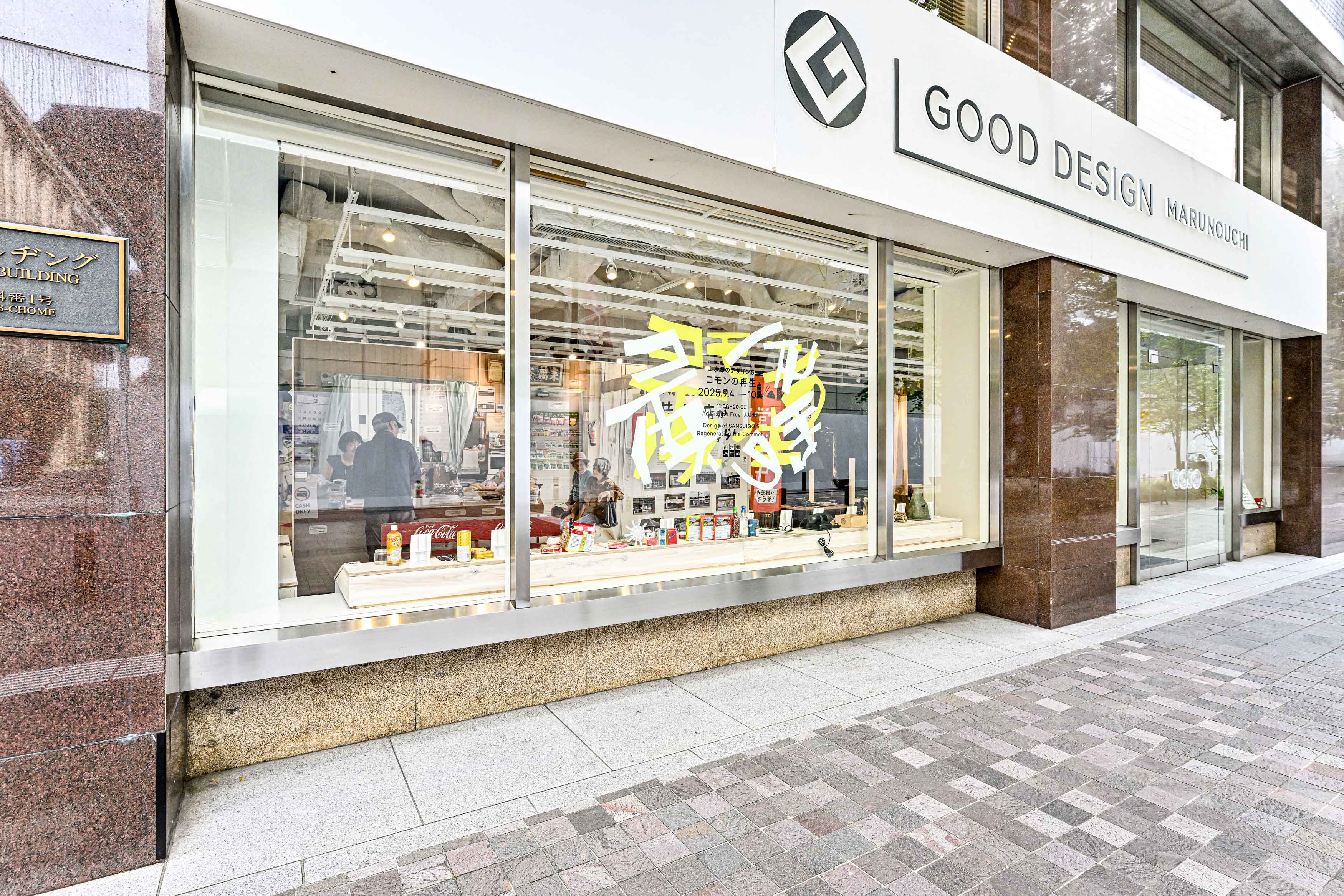









GOOD DESIGN Marunouchi will be holding the exhibition "Design in the Landscape 6 - Crafting Futures" from Wed, September 16th to Sun, October 11th, 2026.
Exhibition contents
Sansuikyo is a coined word that combines the blessings of the land, "Sansui" (mountains and water), and the rich daily life that is born and nurtured through human connections, "Sato" (village).
In mountainous and rural areas across Japan, an increasing number of designers are expanding the unique values they've discovered within the local way of life through their craftsmanship and activities. And these practices are creating new changes throughout society.
Since May 2020, the Japan Institute of Design Promotion has been running "Sansuikyo Channel," a streaming program that focuses on designers active in the "Sansuikyo" area, and has introduced more than 120 designers to date.
The Sansuikyo Design Exhibition is an event where three of these designers personally showcase and present their work.
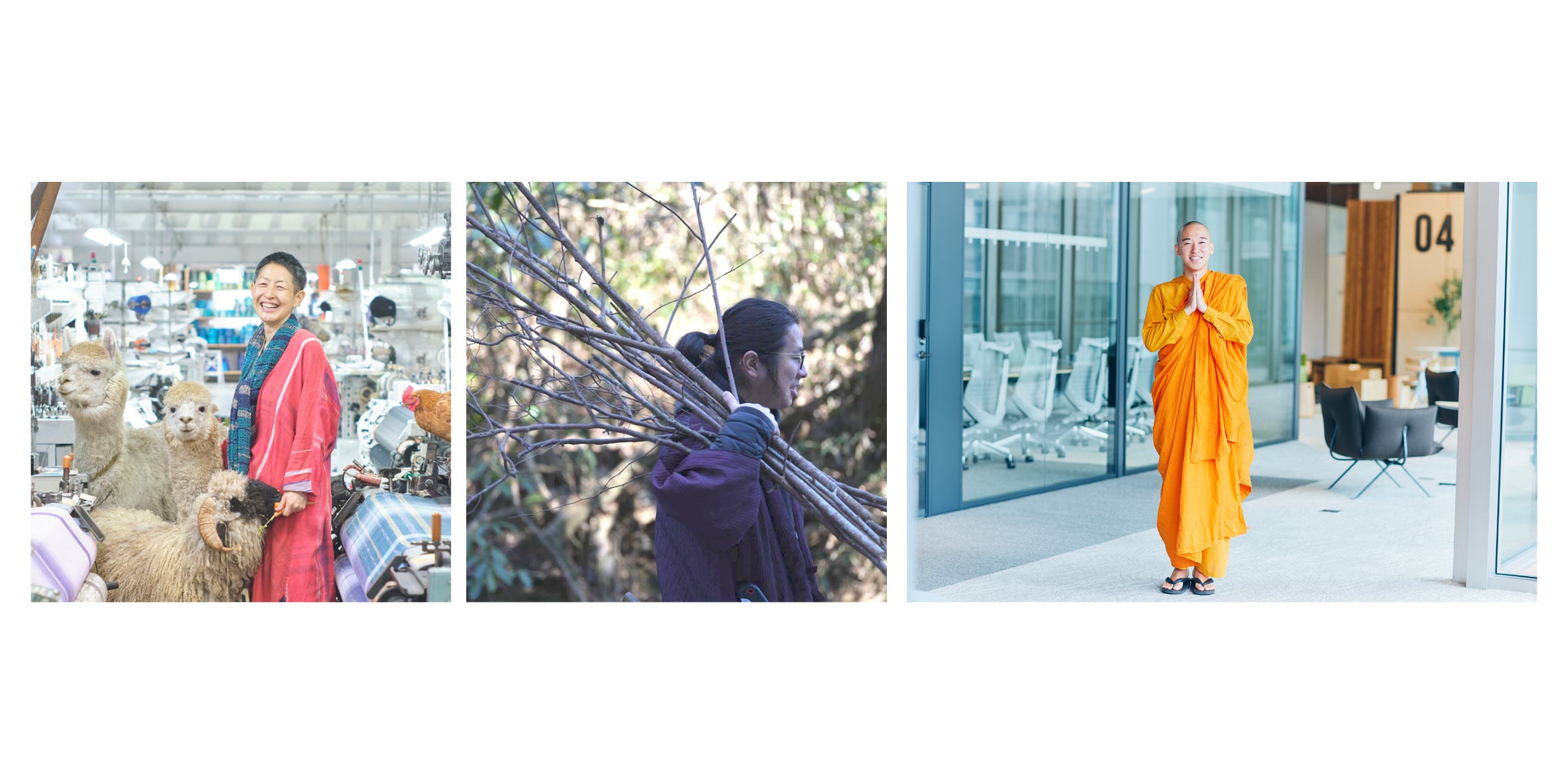
For this sixth edition, we will be featuring exhibitions by three groups: Katsuyoshi Takasuka/Hataorimachi no Hata-jirushi (based in Fujiyoshida City and Nishikatsura Town, Yamanashi Prefecture), Niime Tamaki/tamaki niime (same: Nishiwaki City, Hyogo Prefecture), and Ryoun Tsukahara/KASASAGI Co., Ltd. (same: traditional craft production areas throughout Japan).
Event Overview
----------------
Designs for Mountain and Water Villages 6 - Crafting Futures
Design of SANSUIGO 6 - Crafting Futures
Exhibition Period: September 16 Wed- October 11 Sun, 2026, 11:00 - 20:00 / Closed on October 4 Sun / Free Admission
Venue: GOOD DESIGN Marunouchi (1F Shin-Kokusai Bldg., 3-4-1 Marunouchi, Chiyoda-ku, Tokyo)
https://marunouchi.g-mark.org/
Directors: Takeichi Inoue (Chief Specialist, Japan Research Institute, Ltd.), Keiichiro Fujisaki (Professor, Tokyo University of the Arts, Design Journalist)
Organizer: Japan Institute of Design Promotion
----------------
◾️ When production and design merge
This program introduces the quietly evolving new form of textile production in a region at the foot of Mt. Fuji in Yamanashi Prefecture, a town with a history spanning over a thousand years, and the people who continue to live and work there. When production and design merge, the faces of people, not factories, become visible. Is this merely a phenomenon born out of the times, or will it become a new movement that begins with "monozukuri" (craftsmanship) and spreads throughout Japan?
Katsuyoshi Takasuga / Artist, Art Director, General Director of Hata-jirushi, Hataori-machi
Adjunct Associate Professor at Tokyo Zokei University. Since 2015, General Director of "Hata-jirushi, the Weaving Town." She edited and authored "Hataori-gaku" (winner of the 2024 Good Design Award), a textbook for weavers to pass on weaving culture to children in the Gun'nai weaving region. As Artist, she also creates works using plant fibers and soil as materials, "starting from the soil and returning to the soil."
Hata-jirushi, Hataori-machi https://hatajirushi.jp/
◾️ Towards a comfortable future for people, animals, and plants alike.
Humans, animals, and plants are all the same. We were born on Earth, and we are here, continuing the cycle of life. I want you to remember that through tamaki niime.
These days, things are easily available, but we don't know who made them or what their intentions were. When we don't know, we become insensitive.
Tamaki Niime / Designer
Based in Nishiwaki City, Hyogo Prefecture, a region famous for Banshu-ori textiles, tamaki niime has been consistently involved in weaving, sewing, dyeing, knitting, and sales, and has opened its Lab (workshop). Returning to its roots, it cultivates cotton and lives with sheep and alpacas that provide yarn. Facing nature and working tirelessly with its hands, it vividly feels that all living things are interconnected. We live by supporting each other. We want people to come here, interact with people, animals, and plants, and get their hands dirty. We want them to wear and feel the goodness of things that have been born from healthy connections. Because nothing will change if we don't notice. Through craftsmanship, we want to create opportunities to make a comfortable future. This is tamaki niime's challenge for the next 20 years, 20 years after the company's founding.
tamaki niime https://www.niime.jp/
◾️ Philosophy of KOGEI
Craftsmanship is not the result of one person's will, but rather arises from the relationships between materials, local culture, artisans, and all other elements. KASASAGI has found the true essence of craftsmanship in this approach. This exhibition is an attempt to unravel the mysteries of craftsmanship based on our journey and challenges. We will showcase our philosophy of craftsmanship and the possibilities for future manufacturing.
Ryūun Tsukahara / Representative Director, KASASAGI Co., Ltd.
Born in 2000. After graduating from high school, he moved to the United States, where he rediscovered the charm and great potential of Japanese culture. After returning to Japan, he founded KASASAGI with the aim of "captivating the world with Japanese aesthetics." In recent years, he has been ordained as a Buddhist monk with the permission of the highest Buddhist leader in India, Reverend Sasai Shūrei. He was selected as one of the "Forbes Culture Entrepreneurs 30" as a Gen Z entrepreneur.
KASASAGI https://kssg0311.com
Director's Message
Keiichiro Fujisaki (Professor, Department of Design, Faculty of Fine Arts, Tokyo University of the Arts; Design Journalist)
In the early Meiji era, when mechanized industrial production was not yet widespread and the concepts of "craftsmanship" and "industry" were not clearly distinguished, "craftsmanship" broadly referred to all forms of manufacturing, including what we now call industry. The English word "craft" also originally meant a broader term encompassing strength, ability, and skilled abilities. However, in Japan today, the image of "manufacturing by hand" has become strongly associated with both words.
We titled this exhibition "Crafting Futures" because the word "craft" embodies the meaning of creating something through dialogue, by engaging physical sensitivity and repeatedly asking and answering questions. Dialogue with materials and local culture. Dialogue with history and memory. Dialogue with artisans and everyday life. Dialogue with machines and tools. These creative activities, carried out through dialogue, are all forms of "craftsmanship" and the very foundation of design. We invite you to decipher the "trajectory of dialogue" etched into the work of the three groups exhibiting their work this time.
Takeichi Inoue (Chief Specialist, Japan Research Institute)
20th-century design and manufacturing were based on mass production and machine manufacturing, leading to a preference for artificial materials that could be processed precisely and uniformly. Throughout the 20th century, design and manufacturing evolved in a direction that moved away from nature and the human body. However, some people are now resisting this trend and attempting to re-examine design and manufacturing by engaging with nature and the human body. It is a craft-like approach, yet it transcends the boundaries of craft, creating unconventional designs and manufacturing. I believe that the hints to the future direction of design and manufacturing are hidden there.
Opening talk and networking session
Date and time: Tuesday, September 22nd (holiday) 17:00-19:00
Venue: International Design Liaison Center (located within Tokyo Midtown Design Hub)
5F, Midtown Tower, 9-7-1 Akasaka, Minato-ku, Tokyo https://www.designhub.jp/access
Guests: Katsuyoshi Takasuka / Niime Tamaki / Ryuun Tsukahara
Moderators: Takeichi Inoue / Keiichiro Fujisaki
Details and applicationhttps://sansuigo6talk.peatix.com